How to Compare Contractor Quotes Without Overpaying
The cheapest quote is not always the best one — and the most expensive quote is not always overpriced. Normalize the scope first, then compare price.
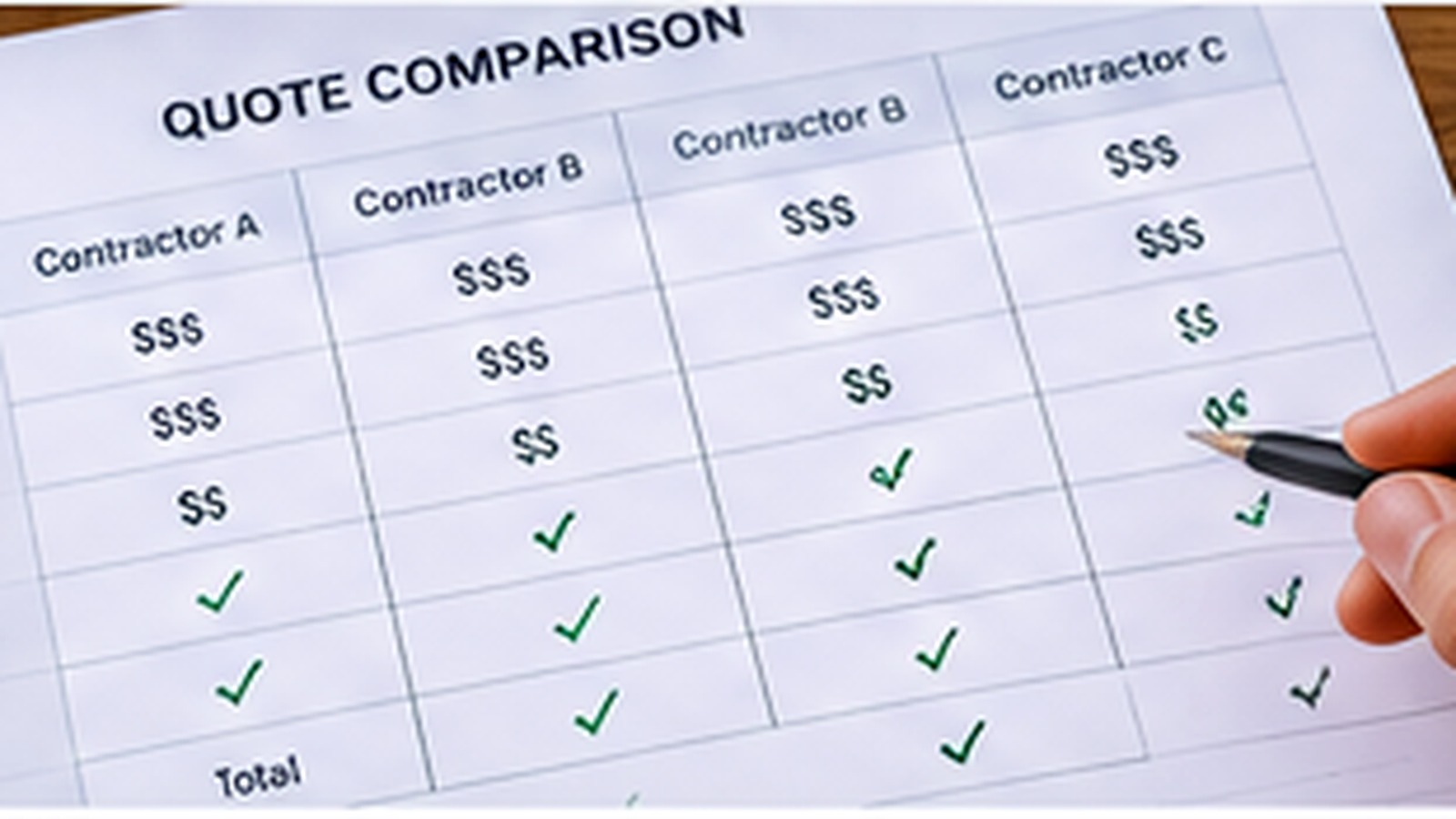
- Normalize the scope before comparing prices.
- Use a planning estimate to identify outliers, not to dictate what a contractor must charge.
- Get important promises into the written proposal or contract.
Step 1: Put every quote on the same scope
Three totals are not comparable if one contractor includes permits and disposal, another excludes them, and a third specifies a premium product. Build a simple comparison sheet with the same categories across every quote.
- Exact materials or equipment.
- Removal and disposal.
- Prep work and repairs.
- Permits, inspections and code-related work.
- Cleanup, protection and restoration.
- Labor and manufacturer warranties.
Step 2: Separate required work from upgrades
A contractor may legitimately recommend improvements that another bidder leaves out. Separate required replacement scope from optional upgrades so you can compare the base project first. Then evaluate whether the upgrades are worth the extra cost.
This is especially important for HVAC efficiency options, roofing material upgrades, window packages, electrical work and remodel finishes.
Step 3: Benchmark the project
A planning calculator can tell you whether a quote appears broadly aligned with the project inputs you entered. Treat a large difference as a question to investigate. It may reveal missing scope in the calculator, a premium in the proposal, unusual local labor conditions or an overpriced bid.
HomeQuoteAudit intentionally labels preliminary and verified pricing sources differently. That transparency matters because a model should not pretend to know local conditions it has not actually measured.
Step 4: Ask why — especially when bids are far apart
The FTC recommends getting multiple written estimates and specifically advises homeowners to ask for an explanation when there is a large price difference. That is a better approach than assuming the highest contractor is dishonest or the lowest contractor is the best value.
- What are you including that the other proposal may not include?
- What assumptions could create a change order?
- Which materials or model numbers are guaranteed?
- Who handles permits and inspections?
- What workmanship warranty is included?
Step 5: Compare risk, not just price
A contractor quote is also a risk allocation document. Payment terms, schedule, insurance, licensing where required, change-order procedures, warranties and cancellation provisions can matter as much as a small difference in price.
The goal is not to force every contractor into the same number. It is to understand what you are buying, what could change, and whether the price makes sense for that scope.
Sources & methodology notes
Market-level statements in this article use public sources. A HomeQuoteAudit calculator result may use a preliminary model until verified local pricing inputs are available for a project and location.