Contractor Markup: What Homeowners Should Look For Instead of a Magic Percentage
Trying to reverse-engineer one “correct” contractor markup can be misleading. A better audit asks what is included, what risk is being carried and how the total compares.

- There is no universal federal contractor-markup percentage that determines whether a home-improvement quote is fair.
- A contractor price can include labor burden, supervision, insurance, equipment, office overhead, warranty risk, scheduling risk and profit in different ways.
- The homeowner should focus on comparable scope and the final value proposition rather than forcing every contractor into one markup formula.
Why a single markup percentage can mislead you
Contractors organize pricing differently. One company may show overhead and profit separately, another may build them into labor or material rates, and another may quote a single project total.
That makes a guessed markup percentage a weak test of fairness unless you also understand how the contractor built the estimate.
What the price has to support beyond raw materials
A professional contractor may have costs associated with estimating, supervision, vehicles, tools, insurance, licensing, office staff, scheduling, warranty service and project risk. Those costs do not make any price automatically reasonable, but they explain why retail project pricing is not simply wholesale material cost plus hourly wages.
A better homeowner test: compare complete proposals
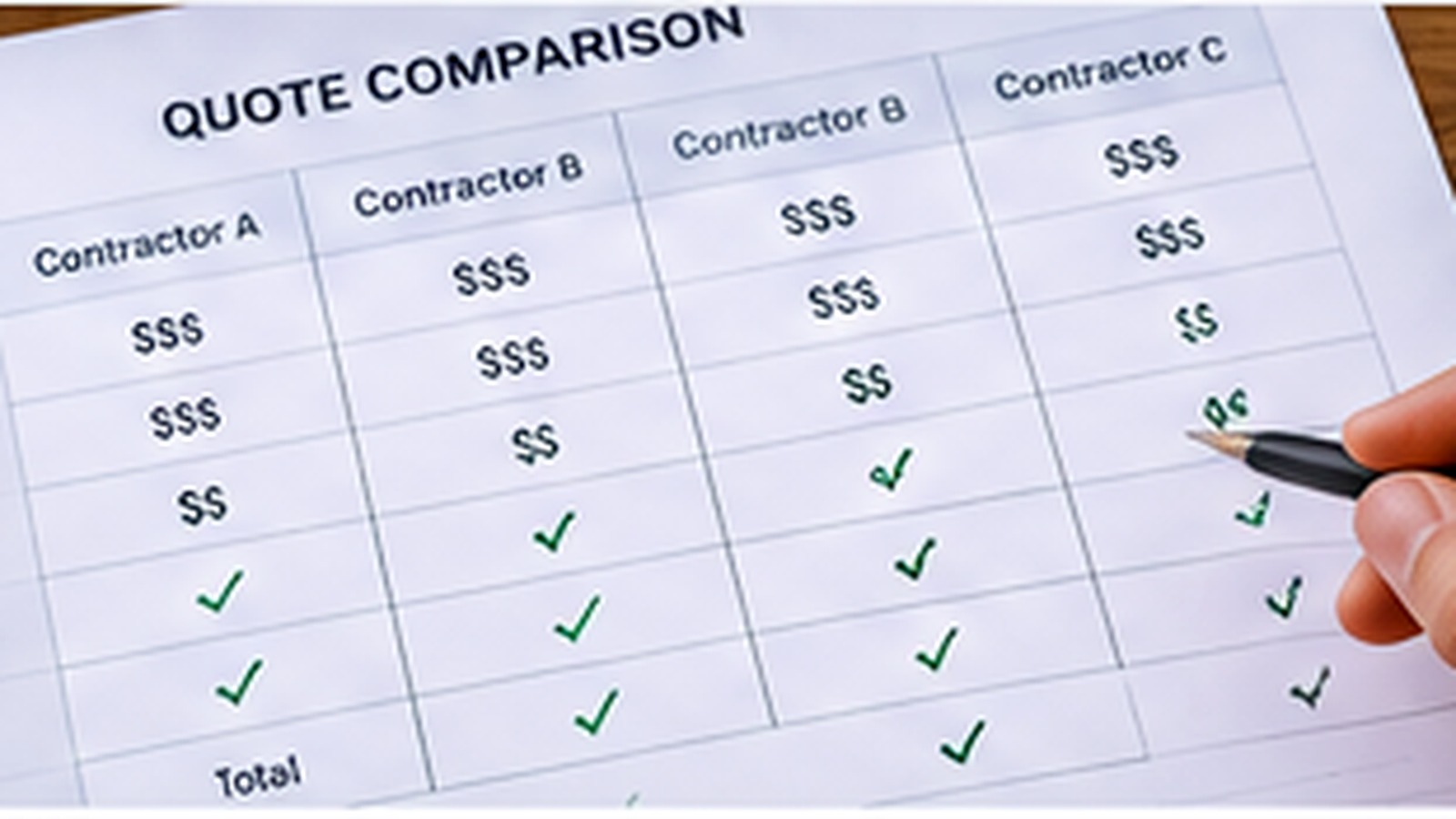
The FTC recommends multiple written estimates and says homeowners should ask for an explanation if prices differ significantly. That comparison is more actionable than assuming one markup percentage should apply to every company and project.
- Compare identical or equivalent materials and equipment.
- Compare exclusions and allowances.
- Check the proposed schedule and payment milestones.
- Understand warranty coverage and who carries correction risk.
- Ask why the quote differs materially from competing proposals.
Use a quote audit to find the question, not accuse the contractor
If a bid sits well above a planning range, the next step is to identify the driver. The result might be premium scope, difficult access, unusually high local labor cost or simply a high-priced proposal. The written estimate should help you tell the difference.
Sources & methodology notes
Market-level statements in this article use public sources. A HomeQuoteAudit calculator result may use a preliminary model until verified local pricing inputs are available for a project and location.