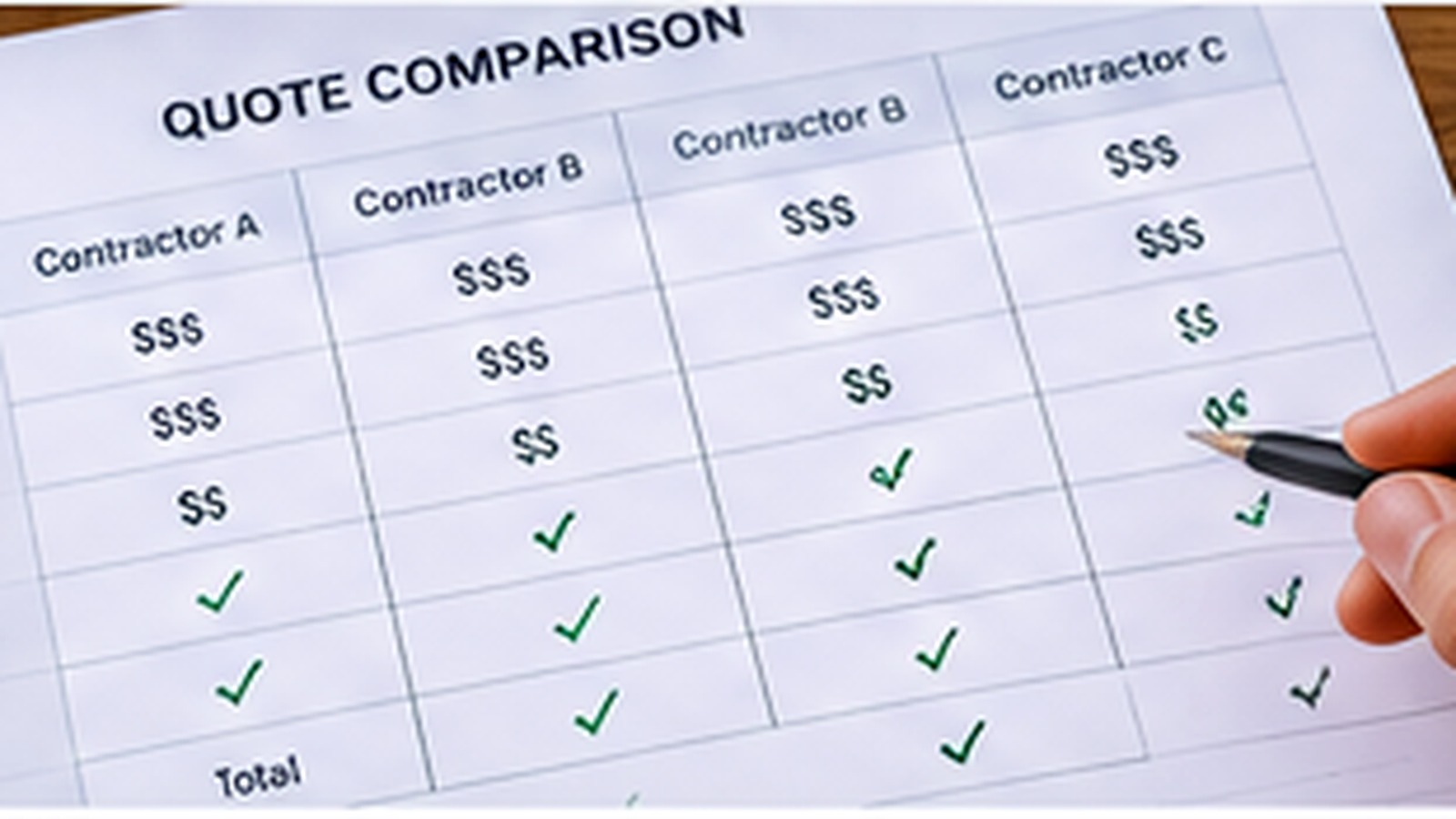
5 Signs Your Contractor Quote May Be Too High
A high quote is not automatically a bad quote. These five warning signs tell you when the price deserves a closer, line-by-line review.

- A large price difference matters most when the scope is vague or materially similar to lower competing bids.
- Undefined allowances and missing exclusions can make a seemingly complete quote difficult to evaluate.
- The best response to an unusually high quote is a better question — not an automatic rejection.
1. The total is high, but the scope does not explain why
Premium materials, difficult access, structural work and better warranties can justify a higher price. A quote becomes harder to defend when the total is substantially above other benchmarks but the written scope is nearly identical to lower bids.
Ask the contractor to identify the specific labor, material, equipment or risk assumptions that create the difference. A professional proposal should make the value proposition understandable.
2. Major parts of the job are bundled into vague line items
Labels such as “materials,” “miscellaneous,” or “additional work” are not automatically wrong, but large unitemized amounts make comparison difficult. The more expensive the project, the more useful it is to understand major components of the price.
- Ask what is included in allowances.
- Ask which conditions trigger a change order.
- Confirm taxes, permits, disposal and cleanup.
- Identify optional upgrades separately from required work.
3. The contractor pressures you to decide before you can compare bids
Short-term manufacturer promotions can exist, but aggressive pressure to sign immediately should make you slow down. The FTC recommends getting multiple written estimates and reviewing the work, materials, timing and price before choosing a contractor.
A quote comparison is more useful when you have time to check licensing or insurance requirements, references and the written contract.
4. The quote is far above a planning range and no local factor explains it
A cost calculator is not a bid, but it can act as an early-warning benchmark. If a real quote is materially above the planning range, check whether the house has unusual complexity, whether your market has higher labor costs, and whether the proposal includes upgrades the calculator did not model.
If none of those explanations apply, another written estimate can help determine whether the first proposal is an outlier.
5. The payment terms create more risk than the project requires
Price is only one part of quote quality. A proposal can be financially unattractive even if the total appears reasonable when payment timing, deposit requirements, change-order terms or cancellation language are unusually one-sided.
Read the full contract and understand local rules before paying. HomeQuoteAudit does not provide legal advice, but a cost audit should always be paired with contract due diligence.
Sources & methodology notes
Market-level statements in this article use public sources. A HomeQuoteAudit calculator result may use a preliminary model until verified local pricing inputs are available for a project and location.