Roof vs. HVAC: Which Home Project Costs More in 2026?
There is no universal winner. Roof and HVAC projects are priced by very different variables, so the more expensive one depends on the house, system and local market.
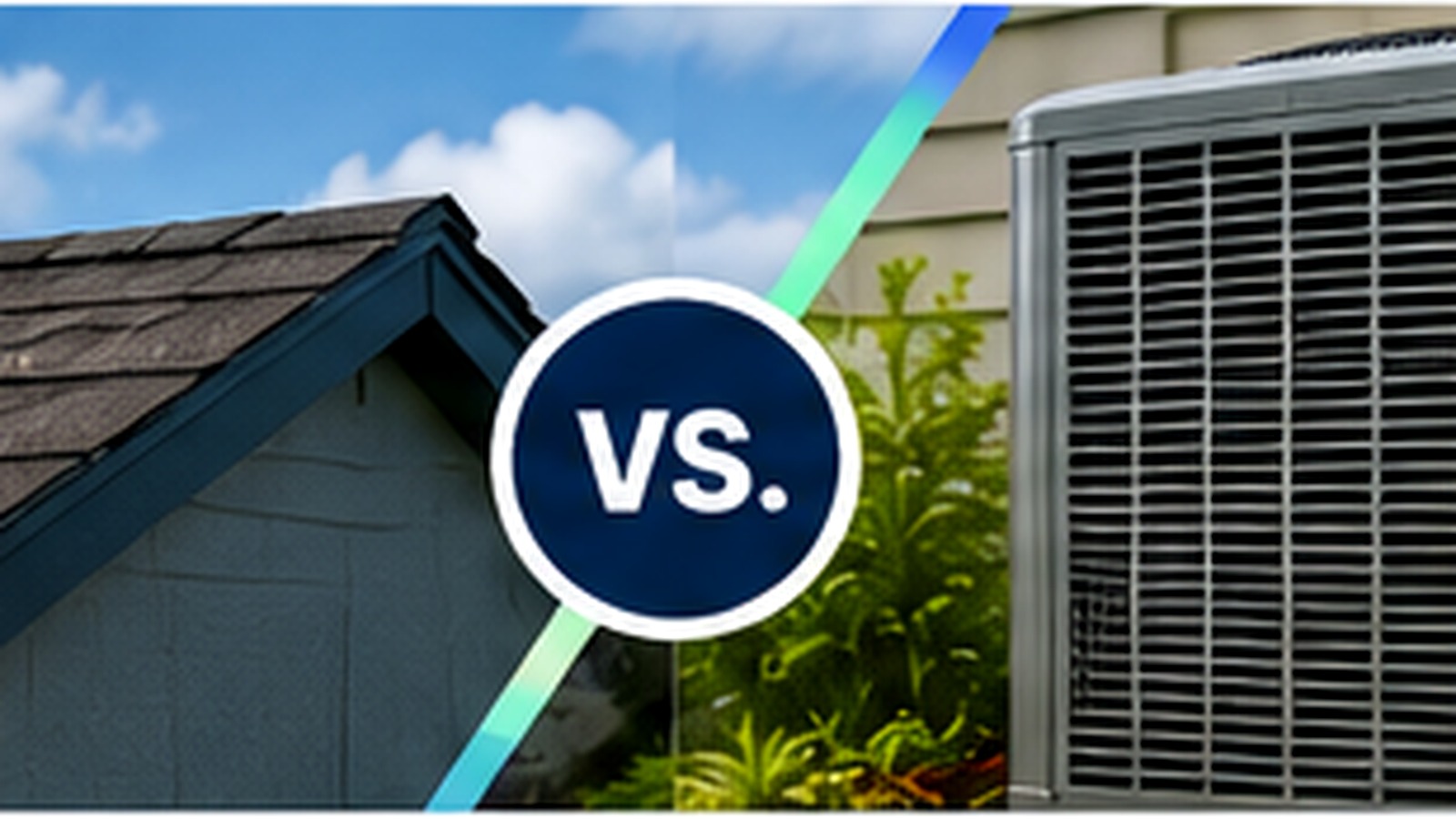
- Roofing costs scale heavily with roof area, material, tear-off and complexity.
- HVAC costs are driven more by equipment configuration, capacity, efficiency and installation scope.
- The better comparison is not “which category costs more nationally?” but “which scope is larger for this specific home?”
Roofing and HVAC are expensive for different reasons
A roof is a large exterior assembly with significant material quantity, removal and disposal. HVAC replacement concentrates more value in equipment, specialized labor, controls, refrigerant-related work and system commissioning. That means the cost curves behave differently.
A large, steep, complex roof can easily become the dominant project. In another home, a multi-system HVAC replacement with duct, electrical and efficiency upgrades can be the larger investment.
Roof replacement cost drivers
Roofing is particularly sensitive to scope that is not visible from a simple square-foot input. That is why contractor inspections can reveal costs a preliminary online estimate cannot know.
- Actual roof area rather than interior living area.
- Roof pitch, height, access and architectural complexity.
- Material system and underlayment.
- Number of existing layers and tear-off requirements.
- Decking, flashing, ventilation and code-related repairs.
HVAC replacement cost drivers
Labor is a meaningful component of HVAC work, and official wage data show why geographic adjustment matters. The Bureau of Labor Statistics publishes HVAC occupation wage estimates by geography, which can be incorporated into regional pricing models.
- System type, capacity and efficiency target.
- Matched indoor and outdoor equipment.
- Ductwork condition and modifications.
- Electrical, condensate and line-set work.
- Installation access, permits, commissioning and warranties.
The right way to compare the two projects
Run each project separately using the best information you have, then compare planning ranges rather than generic national headlines. If you already have contractor bids, enter those too. The quote-audit layer helps you see whether each proposal is broadly aligned with its project-specific range.
If both projects are needed soon, the decision may also depend on urgency, water-intrusion risk, heating or cooling reliability, energy use and financing. Cost is important, but it is not the only priority variable.
Sources & methodology notes
Market-level statements in this article use public sources. A HomeQuoteAudit calculator result may use a preliminary model until verified local pricing inputs are available for a project and location.